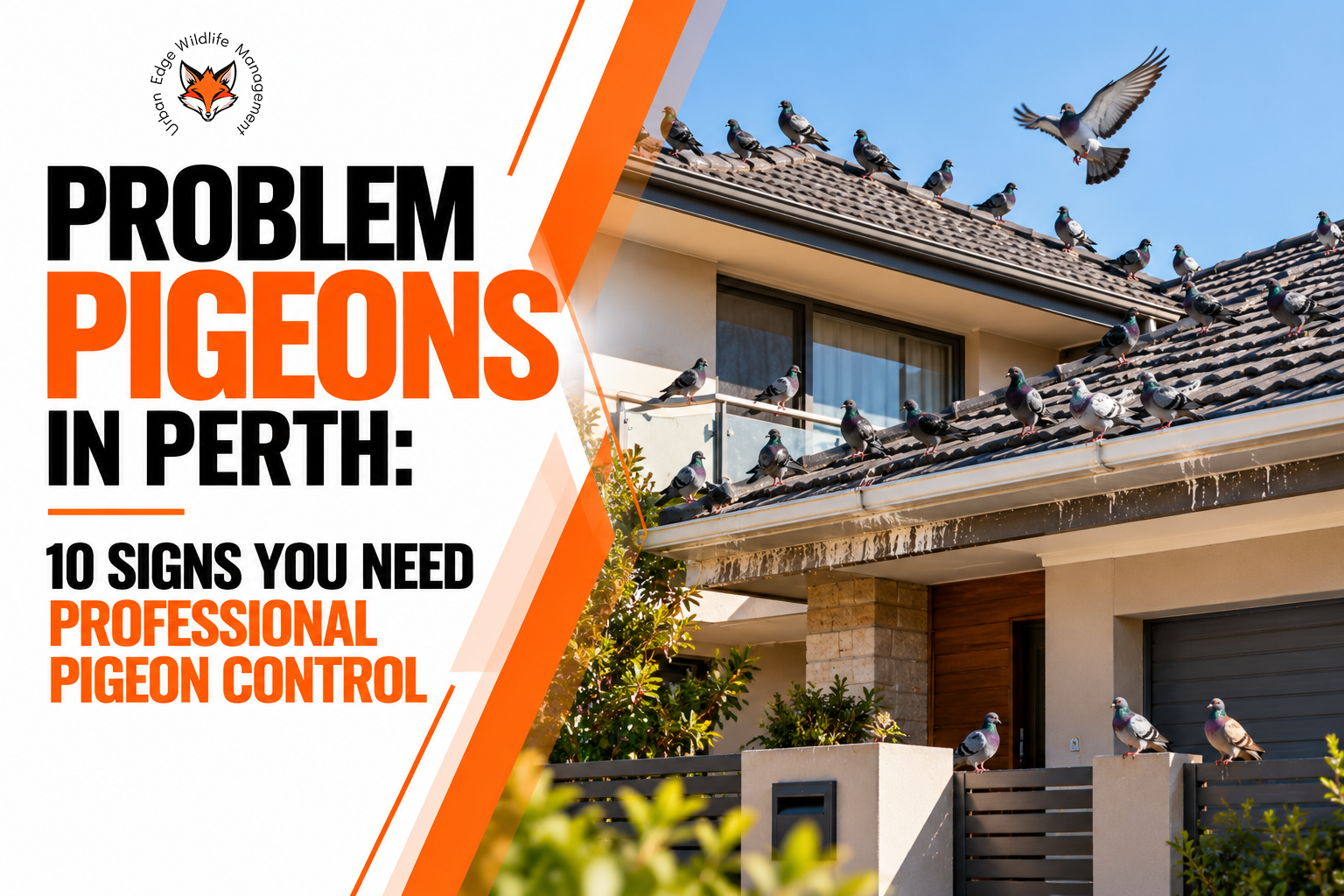

A few pigeons resting on a ledge or picking at scraps in a car park rarely signals trouble. Pigeons are part of almost every urban and industrial area in Perth, and short visits usually sort themselves out. The difficulty starts when the same birds keep coming back, the flock grows, and the mess and damage begin to build. That is the point where problem pigeons shift from a passing sight to something worth managing properly.
When Do Pigeons Become a Problem?
Pigeons become a problem when their activity is persistent or increasing, affecting hygiene, property or operations, or when birds keep nesting and roosting despite basic deterrents. Professional pigeon control is worth considering once the issue is established across a site rather than limited to the occasional visiting bird.
10 Signs Your Pigeon Problem Needs Professional Attention
Droppings That Keep Building Up
When droppings return faster than you can clean them, birds are spending real time on your property. Beyond the constant maintenance, build-up on walkways, stairs and loading areas creates slip hazards and hygiene concerns that commercial sites can’t ignore.
The Same Birds Keep Returning
One of the first things we look for is whether activity is isolated or settling in. If pigeons return to the same ledge, roof or doorway day after day, the site is usually offering reliable food, shelter or roosting spots that keep drawing them back.
You’re Finding Nests and Nesting Material
Feathers, twigs and debris tucked into ledges, gutters or roof cavities point to established nesting. Once pigeons have bred on-site, they tend to treat it as home, which makes the problem harder to shift than a few passing visitors.
The Flock Is Getting Bigger
A handful of birds becoming a steady group is a clear signal. Growing numbers usually mean the site has become a dependable roosting or feeding location, and flocks rarely thin out on their own once they’ve settled.
Pigeons Are Getting Into Roofs and Enclosed Spaces
Birds slipping into roof voids, wall cavities, warehouses or plant rooms are exploiting access points that aren’t obvious from the ground. Removing the visible birds does little here, the entry points remain, and new birds simply move in.
Your Building or Equipment Is Taking Damage
Acidic droppings can corrode surfaces over time, while nesting debris blocks gutters and downpipes. On many Perth sites we see build-up around solar panels, air-conditioning units, signage and roof structures, where it affects both performance and upkeep.
Basic Deterrents Have Stopped Working
Pigeons adapt. A single spike strip or a lone deterrent often just moves them to the next ledge, gutter or beam. When birds work around what you’ve installed, the problem usually needs a more complete look at every landing and access point.
Pigeons Are Affecting Staff, Customers or the Public
In shopfronts, warehouses and public buildings, contaminated entryways, slippery surfaces and mess near seating or stock create real operational and presentation problems. For customer-facing and workplace environments, this is often the point where action becomes a priority.
The Problem Is Spreading Across the Site
When activity moves from one ledge to several areas, different rooftops, multiple entrances, separate buildings, the issue is becoming established rather than isolated. Spread across a property signals that conditions across the whole site suit the birds.
You Keep Removing Pigeons but They Return
If you’ve cleared birds more than once and they keep coming back, removal alone isn’t solving it. The underlying draw, food, shelter, access or roosting space is still there, and that’s the real issue professional management is built to address.

Why Removing Pigeons Isn’t Always Enough
Removing individual birds treats the symptom, not the cause. Lasting results come from understanding why pigeons chose the site in the first place. We assess the property, identify roosting and access points, and combine appropriate control with prevention, exclusion, proofing, habitat changes and monitoring, so the conditions that attracted the birds no longer do.
Managing Problem Pigeons the Right Way
Occasional pigeons are part of life in Perth. An established problem, one that keeps returning, spreading or causing damage is different, and it rarely resolves itself. At Urban Edge Wildlife Management, we assess each site properly and match the response to the conditions, combining compliant control with prevention and proofing for lasting results across Perth and WA properties. If the signs above sound familiar, it’s worth having the activity looked at before problem pigeons become harder to manage.
Frequently Asked Questions
How do I know if I have a pigeon infestation?
Look for patterns rather than one-off sightings, droppings that keep returning, growing bird numbers, nests or nesting material, and pigeons roosting in the same spots daily. When several of these appear together and persist despite basic deterrents, it usually points to an established infestation rather than occasional pigeon activity.
What attracts problem pigeons to Perth properties?
Pigeons are drawn to reliable food, shelter and safe places to roost. Building ledges, warehouse structures, sheltered roof spaces, rooftop equipment and easy food sources around commercial areas all make a site appealing. Once a property offers these, birds tend to return and settle rather than move on.
Does pigeon control remove pigeons permanently?
No method guarantees pigeons never return, but combining control with prevention gives lasting results. By removing access, roosting and nesting opportunities through exclusion and proofing then monitoring the site, the conditions that attracted birds are addressed, which makes it far less likely a new flock establishes itself.