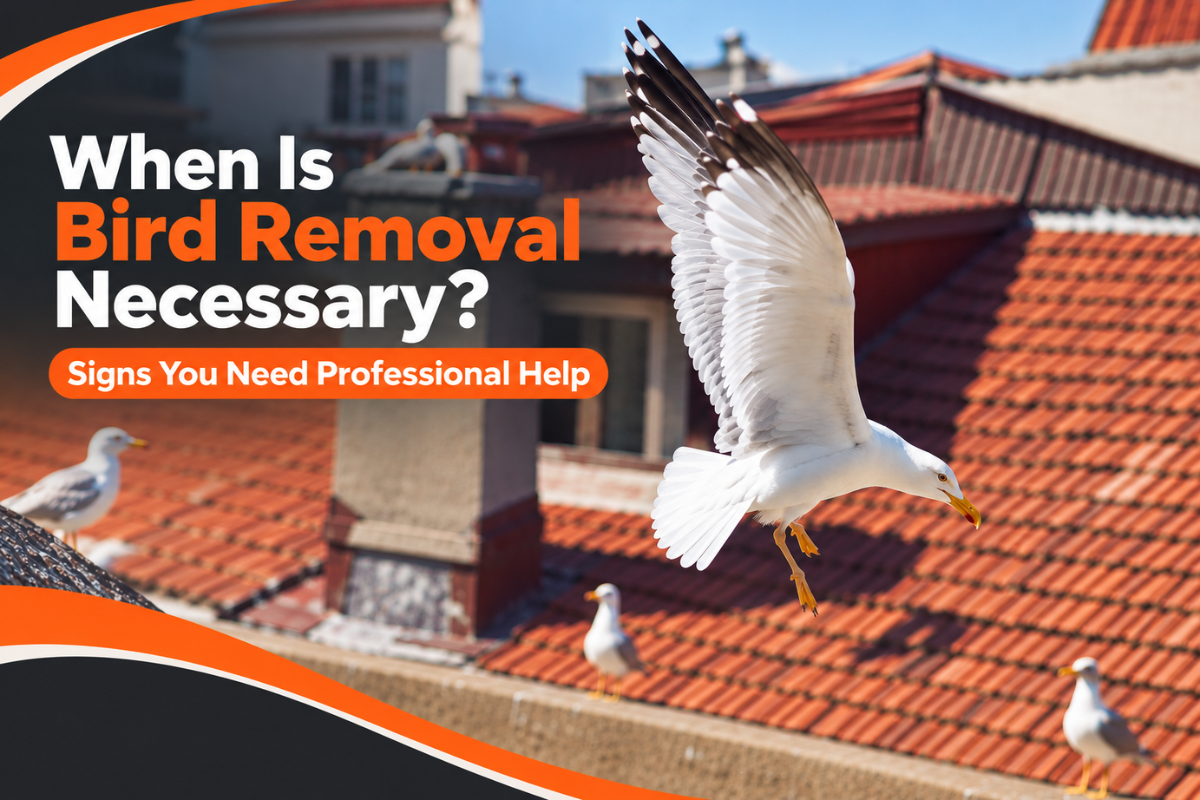

A couple of birds on a warehouse roof isn’t a problem. The same birds nesting in the roof cavity by spring, with droppings across the loading dock and nesting material blocking the gutters, is another matter.
Bird removal is generally necessary when activity becomes persistent rather than occasional: when birds nest on the property, damage roofing, solar panels or drainage, create hygiene or safety concerns, interfere with operations, or keep returning despite basic deterrents. Occasional visitors rarely warrant intervention.
Knowing where that line sits is the hard part. Here’s what we look for.
Signs You May Need Professional Bird Removal
- Birds return to the same spot daily rather than passing through.
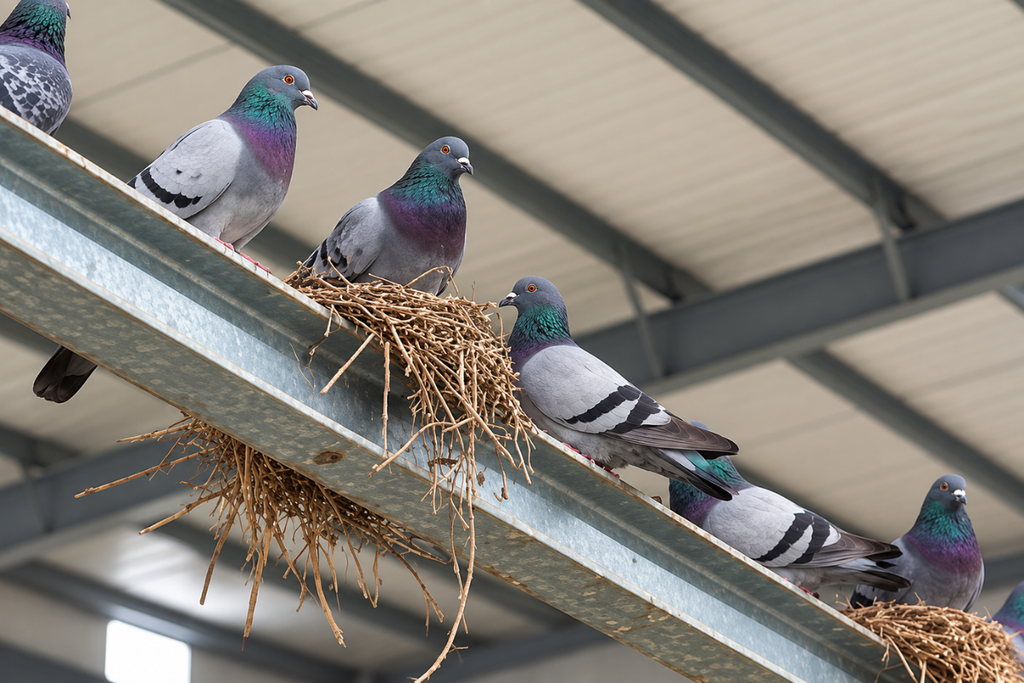
- Nests in roof cavities, gutters, beneath solar panels, behind signage or in other sheltered areas.
- Droppings, feathers and nesting debris building up in the same places.
- Gutters or downpipes blocking with nesting material.
- Damage to roofing, solar panels, air-conditioning units, signage or stock.
- Persistent noise, particularly early morning in the breeding season.
- Contamination risk near food preparation areas, walkways or ventilation intakes.
- Deterrents that worked briefly, then stopped working.
One alone may not mean much. Several together usually mean birds have settled in.
Why Recurring Bird Nesting Shouldn’t Be Ignored
Once birds successfully raise young at a site, they tend to come back. Bird nesting problems on Perth properties often start small and become entrenched over a season or two, because the birds aren’t choosing the location at random. They’ve found shelter, safety and usually food or water nearby.
That’s why removing the birds you can see rarely settles it. If the roof cavity is still open and the ledge still sheltered, something will use it again. The question isn’t only how to move the birds on, but what the site is offering them.
Why Professional Bird Removal Is Different
Good bird control services in Perth start with an assessment rather than a treatment: identifying the species, locating nesting and roosting points, tracing access into cavities, and working out what’s attracting the birds.
Species identification matters more than people expect. Many native birds are protected under Western Australian legislation, and introduced species such as feral pigeons or starlings are treated differently. Licensing may apply depending on the species and method, which is worth confirming before work begins.
The appropriate mix of control, exclusion and proofing then depends on the building and the scale of activity. Removal alone is rarely a long-term fix while the nesting opportunity remains.
When to Act Before the Problem Gets Worse
Stop trying temporary measures when birds are nesting rather than perching, when droppings or debris are affecting equipment, stock or public areas, or when the same deterrent has been reset more than once without lasting effect. Acting before breeding season also keeps the options simpler.
Getting an Assessment
Recurring returns, established nests, accumulating mess, structural damage and failed deterrents are the signals worth taking seriously. Addressed early, most bird issues are straightforward. Left through a breeding season or two, they become property, hygiene and operational problems at once.
If you’re seeing these signs, our team can assess what’s happening and advise on bird removal in Perth and the proofing needed to prevent a repeat.
Frequently Asked Questions
When should I call professional bird removal?
When birds are nesting rather than passing through, when droppings or damage are affecting your property, or when deterrents keep failing. Activity that returns after you’ve moved birds on usually means the site itself needs assessing.
How do I know if birds are nesting on my property?
Look for nesting material in gutters, roof cavities, behind signage and beneath solar panels, droppings concentrated in the same spots, and increased noise around dawn. Birds carrying twigs or debris are a reliable early sign.
Can bird removal stop birds from coming back?
Not by itself. Removal deals with the birds present, but unless the access points and shelter that attracted them are addressed through proofing or exclusion, other birds commonly take their place.