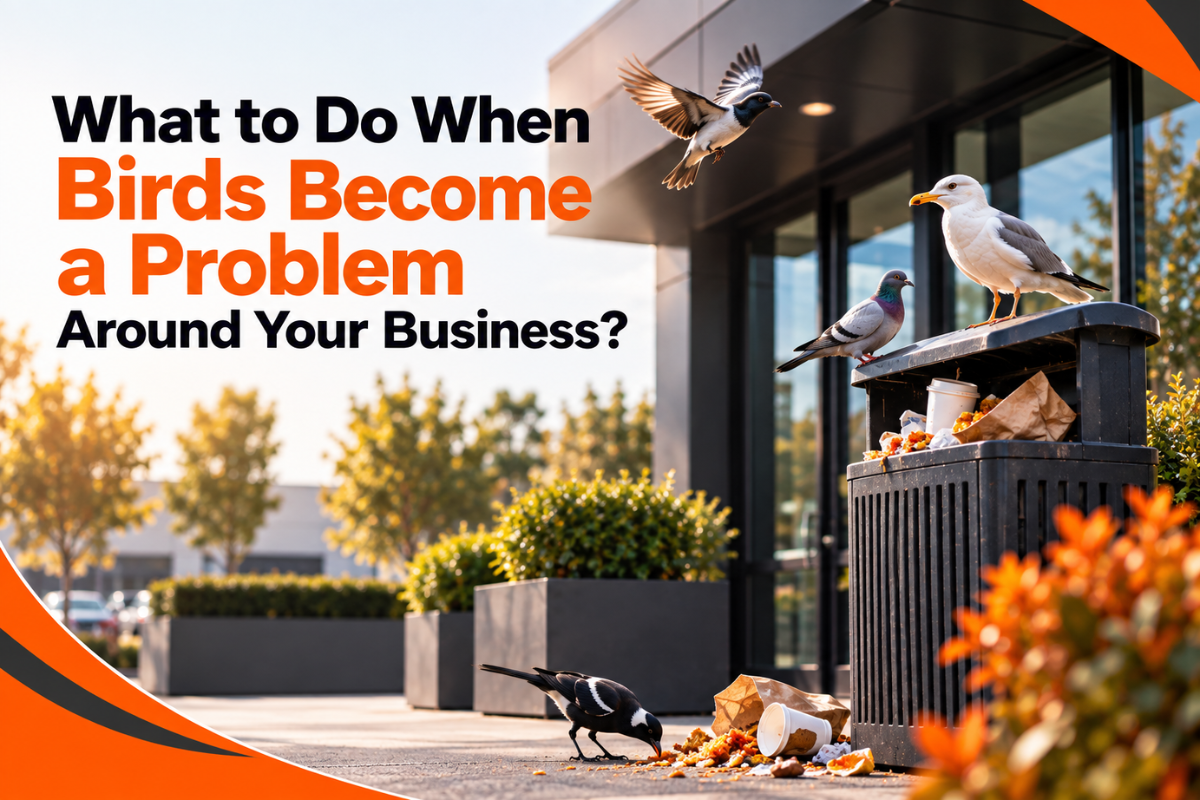

Pigeons along a shopfront awning, gulls working the outdoor tables at lunchtime, starlings nesting above a warehouse loading dock, most Perth businesses tolerate some bird activity until it stops being occasional.
When birds become a recurring problem, the response needs to be systematic rather than reactive. Identify what is attracting them, assess where they are nesting and roosting, address those areas responsibly, and put exclusion and proofing in place so they cannot return. Repeated temporary deterrents rarely resolve an established problem, because they treat the birds rather than the conditions keeping them there.
Why Are Birds Attracted to Commercial Properties?
Commercial buildings offer everything nuisance birds need in one place. Food waste around bins and loading areas, spills near outdoor dining, and water pooling on flat roofs supply the resources. The structure supplies the rest: sheltered roof spaces, ledges and parapets, gaps behind signage, covered loading zones and recesses around plant equipment. Warehouses, shopping centres, hospitality venues and offices simply have more sheltered, undisturbed space than a house.
What Problems Can Birds Cause for Businesses?
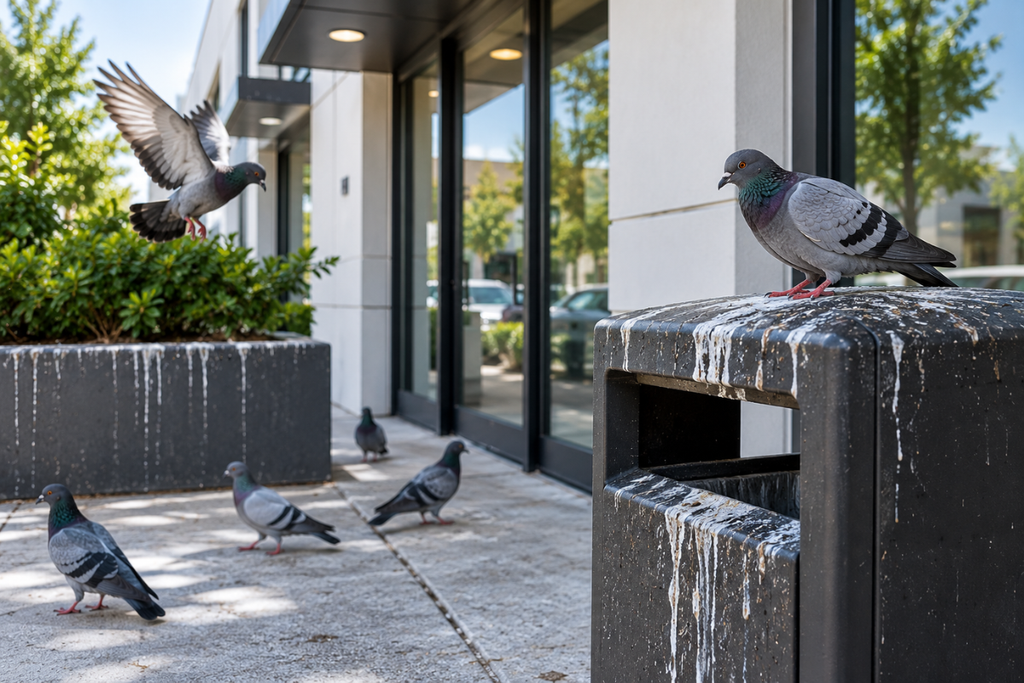
A bird infestation at commercial properties creates costs that build quietly. Droppings accumulate on walkways and entrances. Nesting material blocks gutters and downpipes, becoming a drainage problem in winter. Debris fouls roofing, solar panels and external equipment. Add noise, odour and visible untidiness at customer-facing sites.
Hygiene concerns matter, though the risk depends on how extensive the contamination is and how promptly it is cleaned. Fouling near food-handling areas warrants a different response from droppings on a rear roof.
Start With a Proper Assessment
Before choosing a solution, work out what is happening on site: where birds feed, where they roost overnight, whether they are nesting, how they get into cavities, and which areas are most exposed. One affected ledge differs from birds using a whole roof. Removing visible birds without this picture usually means activity resumes within weeks, because the access and shelter that drew them are untouched.
Use Commercial Bird Control Strategies That Address the Cause
Effective commercial bird control combines methods rather than one device. Physical exclusion is the backbone netting across open voids, wire systems on ledges, spikes where the structure suits them alongside access-point management, targeted deterrents, better waste containment and monitoring. The right mix depends on the building, the species and how established the problem is. What suits a warehouse roof void will not suit a heritage shopfront facade.
Why Bird Proofing Is Important
Proofing stops the problem recurring by restricting access to the places birds want: roof cavities, eaves, ledges, plant areas, spaces behind signage and covered loading zones.
Two things matter. It needs to cover the site rather than one hotspot, or birds shift to the next suitable spot. And it must be done carefully so birds, nests or young are not sealed inside a cavity, a real risk with roof spaces, and one reason bird proofing in Perth commercial buildings is best planned after an inspection.
Should You Remove the Birds or Deter Them?
Not every bird problem calls for removal. Commercial bird removal may form part of a broader strategy, but the response depends on the species, whether nesting is active, and whether exclusion alone can solve it.
Species matters most. Many native birds are protected under Western Australian legislation, and active nests, eggs and young may attract further protections. Introduced species are treated differently, and the practical answer is often exclusion rather than removal.
When Should a Business Call a Bird Pest Control Professional?
Consider bird pest control in Perth when numbers are climbing, when birds return soon after deterrents go in, when nesting is somewhere you cannot safely reach, or when droppings are accumulating extensively. The same applies when drainage is affected, equipment is damaged, activity spans several parts of the property, or temporary fixes have not lasted.
How Businesses Can Prevent Future Bird Problems
Prevention works best inside routine maintenance rather than as an emergency response. Keep waste contained and bin areas clean, clear spills promptly, and reduce standing water. Inspect roof access points, eaves and signage periodically, and repair gaps that create entry. Where activity keeps reappearing, arrange an assessment instead of repeating the same deterrent.
The Practical Takeaway
Bird problems around commercial properties need addressing on two fronts: the activity now, and the conditions allowing it. Deal with only the first and the birds return. Deal with both, and the site stops being worth coming back to.
Frequently Asked Questions
How do I keep birds away from my business?
Remove the attractants and restrict access. Secure waste, clean spills promptly, reduce standing water, and close off sheltered roosting spots such as roof cavities, ledges and signage recesses. Deterrents alone lose effect unless the shelter and food are dealt with.
What is the most effective commercial bird control method?
No single method suits every site. Physical exclusion such as netting and ledge systems gives the most durable results, because it removes access rather than discouraging birds. The effective approach is usually a combination chosen after assessing the building and species.
When should a business consider commercial bird removal?
When birds are established on site, nesting in inaccessible areas, or causing damage that exclusion alone will not resolve. Removal works best as part of a broader plan, and the method depends on the species and any wildlife protections applying.