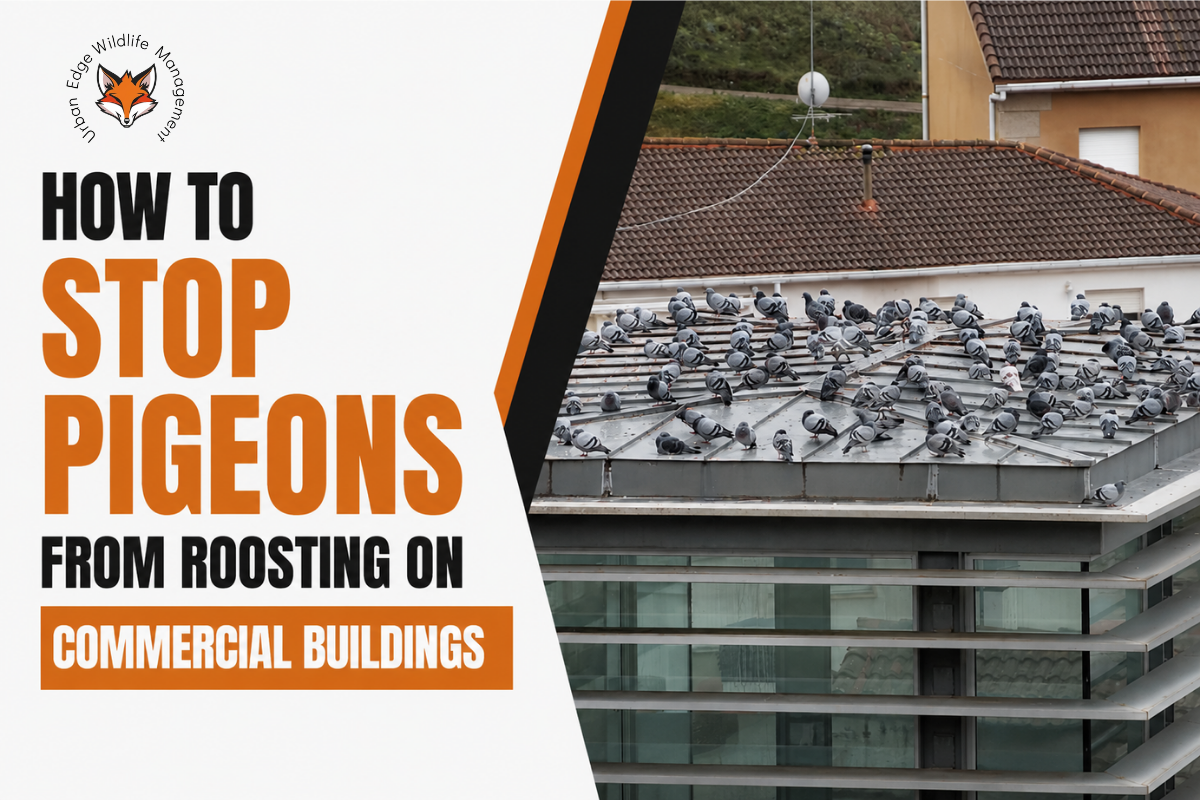

Pigeons might seem like a minor nuisance, but ask any business owner who’s dealt with them and you’ll get a different story. Across Perth and the wider WA region, pigeons are one of the most persistent issues affecting commercial properties from warehouses in industrial estates to busy shopping centres along the coast.
At Urban Edge Wildlife Management, we’ve worked with businesses of all sizes across Western Australia, and the same problems come up time and time again. Here’s a practical blog to help you understand why pigeons target commercial buildings and what you can do to stop them.
Why Pigeons Are Drawn to Commercial Properties
Commercial buildings tick almost every box on a pigeon’s wishlist. They’re tall, sheltered, and usually surrounded by food sources like rubbish bins, café strips, and loading docks.
The types of properties most affected include:
- Warehouses and factories: large flat roofs and quiet rooftop spaces
- Shopping centres: outdoor food courts and constant foot traffic mean easy meals
- Office buildings: ledges, parapets, and signage offer perfect perching spots
- Schools: open grounds, bins, and undisturbed rooftops
- Strata and apartment complexes: multiple ledges, balconies, and shared roof spaces
Once pigeons identify a building as safe, they’ll keep coming back. And because they breed several times a year, a small group can grow into a serious problem in just a few months.
Where Pigeons Like to Roost and Nest
Knowing where pigeons gather is half the battle. On commercial properties, the most common roosting and nesting spots include:
- Roof ledges and parapets: sheltered and rarely disturbed
- Gutters and downpipes: quiet, hidden, and often full of debris
- Signage and lighting fixtures: warm and elevated
- Solar panels: the gap underneath is dry, warm, and out of sight
- Air conditioning units: heat and shelter combined
- Loading bays and awnings: sheltered from the weather and close to food
Routine inspections of these areas can help you catch a problem before it grows.
The Real Risks for Businesses
Pigeons aren’t just a cosmetic issue. The damage and disruption they cause can hit a business hard.
Health and Hygiene Concerns
Pigeon droppings can carry diseases such as salmonella, histoplasmosis, and psittacosis. Their nests also attract mites, lice, and other parasites. For food businesses, schools, and healthcare facilities, this is a serious compliance risk.
Property Damage
Droppings are acidic and slowly corrode roofing materials, paintwork, signage, and solar panels. Nesting debris damages gutters, vents, and rooftop equipment over time.
Blocked Drainage Systems
Nests and feathers regularly block gutters and downpipes. During WA’s wet winter months, this leads to overflow, leaks, and water damage that can affect stock, equipment, and ceilings.
Customer Complaints and Slip Hazards
Droppings on walkways, entrances, and outdoor seating areas create slip hazards and leave a poor impression on customers. For retail, hospitality, and strata properties, this is a daily headache.
Reputation Damage
A building covered in pigeon mess sends the wrong message. Customers notice, reviews mention it, and over time, it can affect foot traffic and tenant retention.
Practical Prevention Tips for Businesses
There are a few sensible steps every business can take to reduce the risk.
1. Manage Food and Waste Sources
Keep bins sealed, clean up around loading bays, and make sure outdoor dining areas are tidied regularly. Even small food scraps draw pigeons in.
2. Inspect Rooftops Regularly
Schedule routine checks of roof ledges, gutters, signage, and solar panels. Catching nests early is far cheaper than dealing with an established flock.
3. Seal Entry Points
Block off gaps in roof cavities, broken vents, and openings around air conditioning units. These are common access points for nesting birds.
4. Maintain Gutters and Drainage
Regular gutter cleaning prevents nesting material building up and keeps drainage systems working properly.
Professional Pigeon Proofing Solutions
Once pigeons are established, DIY methods rarely cut it. That’s where professional pigeon proofing services across WA make the difference.
Common solutions used on commercial buildings include:
- Bird spikes on ledges, parapets, signage, and lighting
- Netting systems for large open areas like loading bays, warehouses, and atriums
- Mesh barriers under solar panels to stop nesting in the gap below
- Roof proofing to close off cavity entry points and gaps around fixtures
- Scheduled maintenance to keep deterrents working long-term
For larger sites, a tailored approach usually works best. Every building has its own weak points, and a proper inspection helps identify exactly where to focus.
Why Local Experience Matters
Commercial pigeon control across Perth, Rockingham, Mandurah, and Fremantle isn’t a one-size-fits-all job. WA’s coastal climate, salt exposure, and mix of older and modern buildings mean deterrents need to be chosen carefully to last.
Working with a team that knows the local conditions makes a real difference, both in how well the solution holds up and how quickly the problem is resolved.
Talk to Urban Edge About Your Commercial Property
If pigeons are affecting your business, the sooner you act, the easier it is to fix. Urban Edge Wildlife Management provides expert pigeon removal and proofing services for commercial properties right across Western Australia.
Get in touch with our team today and we’ll arrange an inspection, recommend the right solution for your building, and help you keep your property clean, safe, and pigeon-free for the long term.